
Your Numbers
Analytics shows how your hiring is actually going. This is what each figure means and what to do when one looks wrong.
Use the All Positions filter to look at one role at a time. Averages across very different jobs tend to hide the thing you need to see.
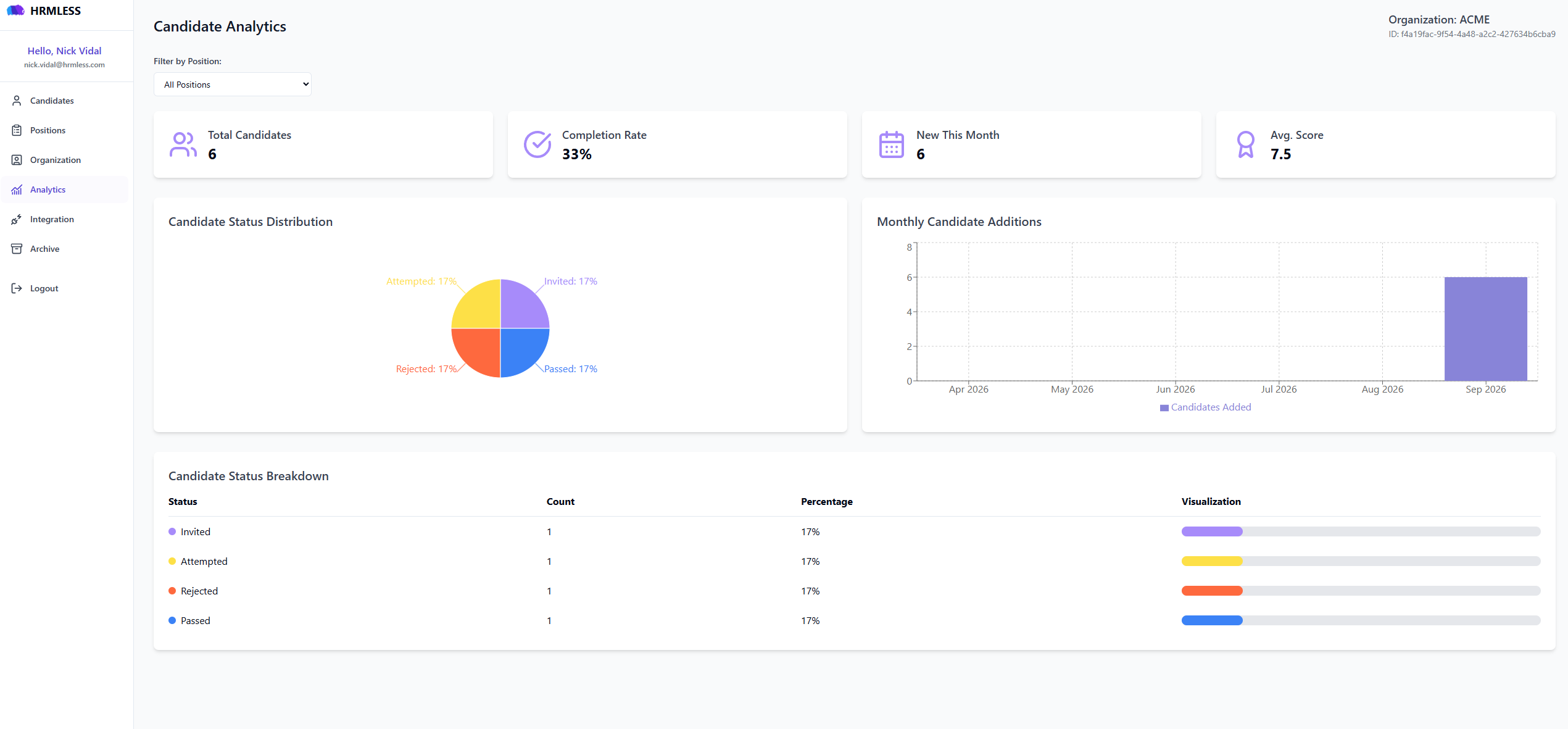
The four figures at the top
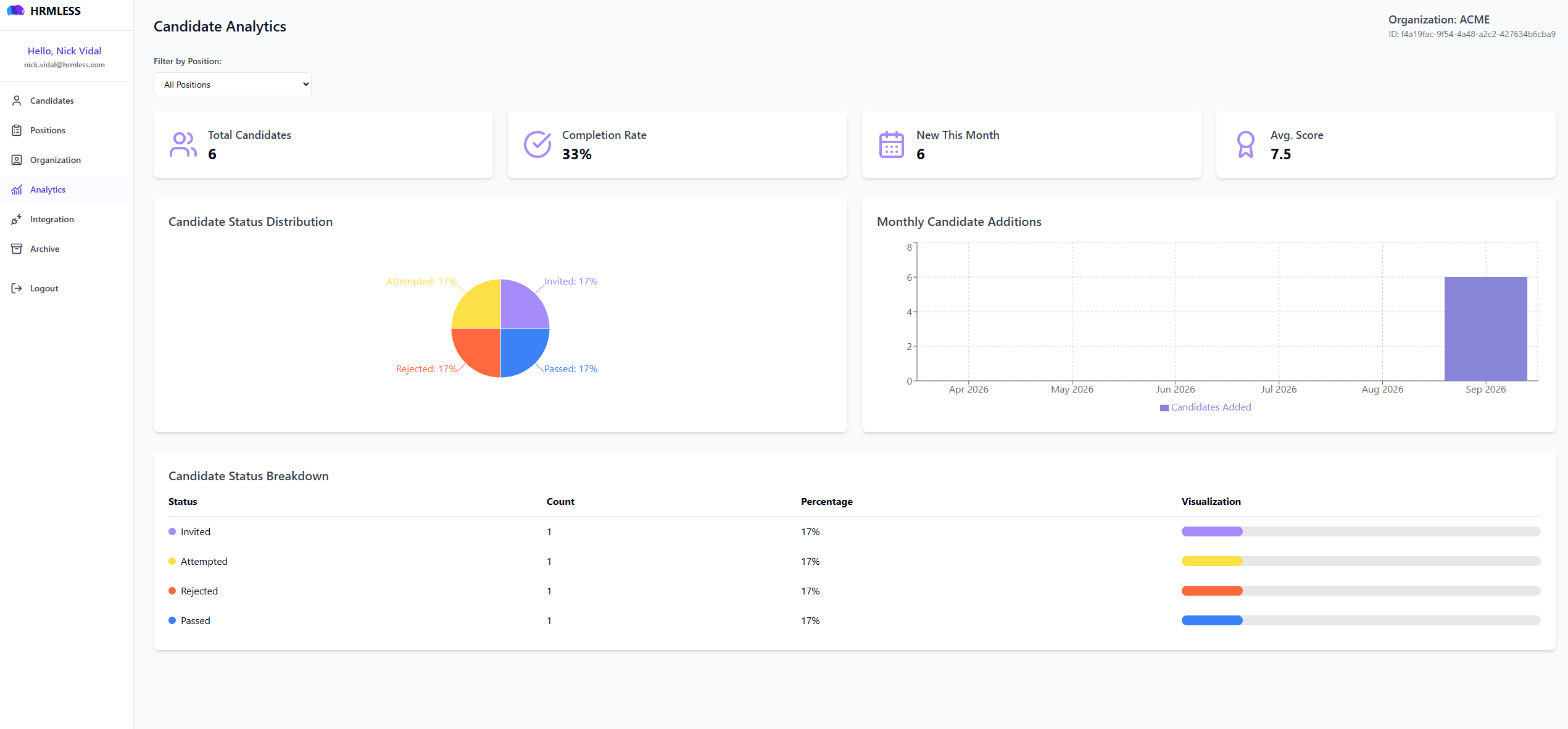
| Figure | What it means |
|---|---|
| Total Candidates | Everyone in view |
| Completion Rate | The share of invited people who finished their interview |
| New This Month | How many you have added this month |
| Avg. Score | The average score across candidates with a settled outcome — passed or rejected |
Avg. Score does not cover everybody with a score. Someone whose interview has been graded but who has not yet been passed or rejected is left out of it. So if you have four scores on screen and the average only reflects two of them, that is why — and clearing your Needs Review queue is what brings the rest in.
For the same reason, the counts in Candidate Status Breakdown can add up to less than Total Candidates. The total counts everyone; the breakdown counts the stages it recognises.
Completion Rate is the one that matters
It is the share of people you invited who actually finished. Everything else depends on it — a great interview applied to a third of your applicants is worth less than a decent one applied to most of them.
If it is lower than you would like, check these in order:
- How long your interview is. The limit is 20 questions and that is not a target. Four to six is plenty.
- Your invitation wording. If people are not starting at all, the message is not persuading them. See candidate messages.
- Retakes. Allow candidates to retake interviews is on by default. If somebody turned it off, a dropped call is a lost candidate.
- Your Attempted count. People who started and stopped are the recoverable ones.
Reading Avg. Score sensibly
A low average is not automatically bad, and a high one is not automatically good.
- High across the board usually means the bar is set where everyone clears it. You cannot rank on that.
- Low across the board usually means the questions are aimed at a different job from the one people are applying for.
- A wide spread is what you want. It means the interview is telling people apart, which is the whole point.
If the spread looks wrong, change the position's questions rather than the minimum score. Moving the score changes who passes without changing what you are measuring.
The breakdown
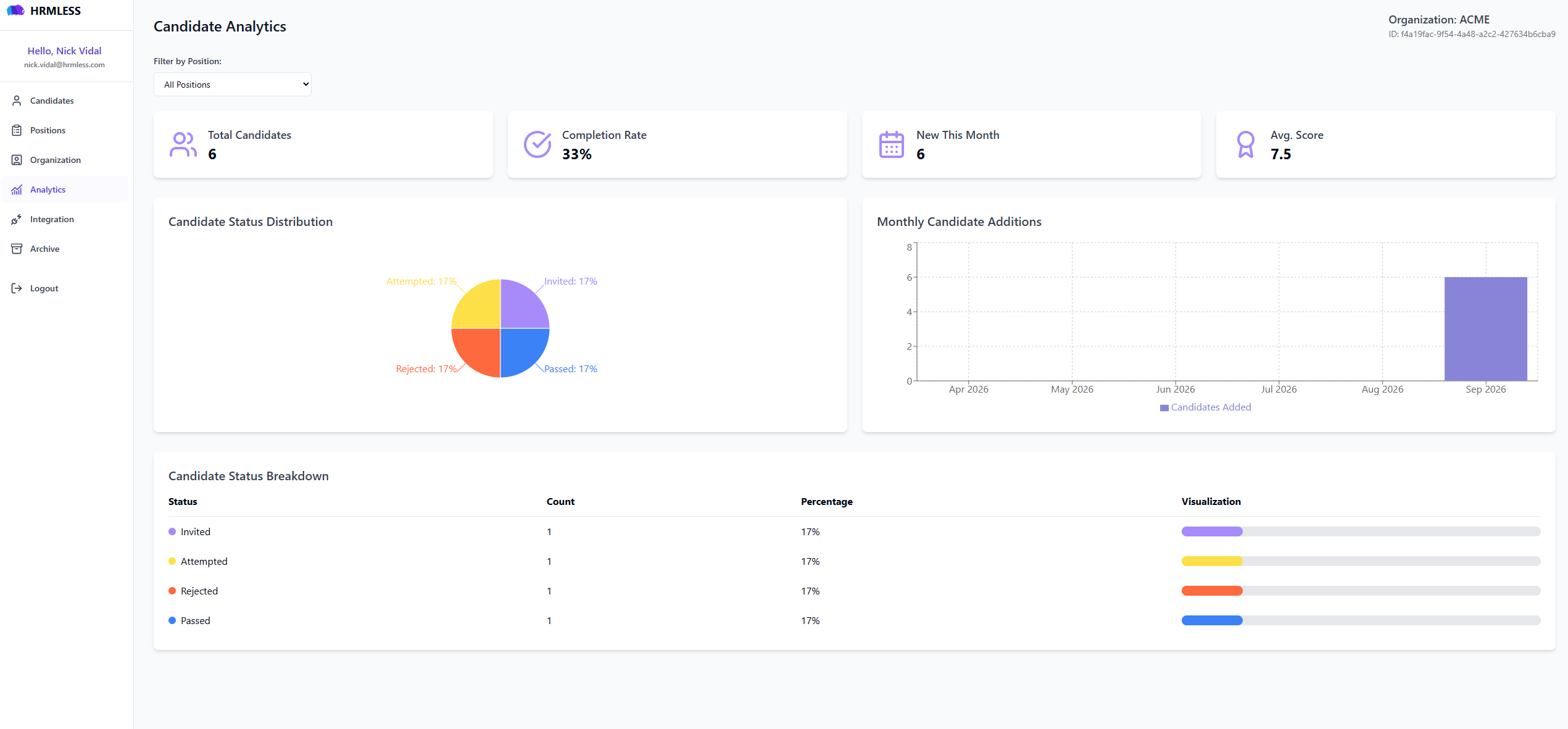
How many people sit in each stage, as a count and a percentage. Useful as a health check — a big pile in one stage usually means something is stuck.
There is also a chart of how many candidates you added month by month.
A brand-new position shows nothing at all, which is normal — the figures fill in as people finish interviews.